
Preparedness
How to Protect Your Home from Wildfire: Defensible Space and Home Hardening
How embers ignite homes, the three defensible space zones around your house, and the home-hardening upgrades that make the biggest difference in a wildfire.
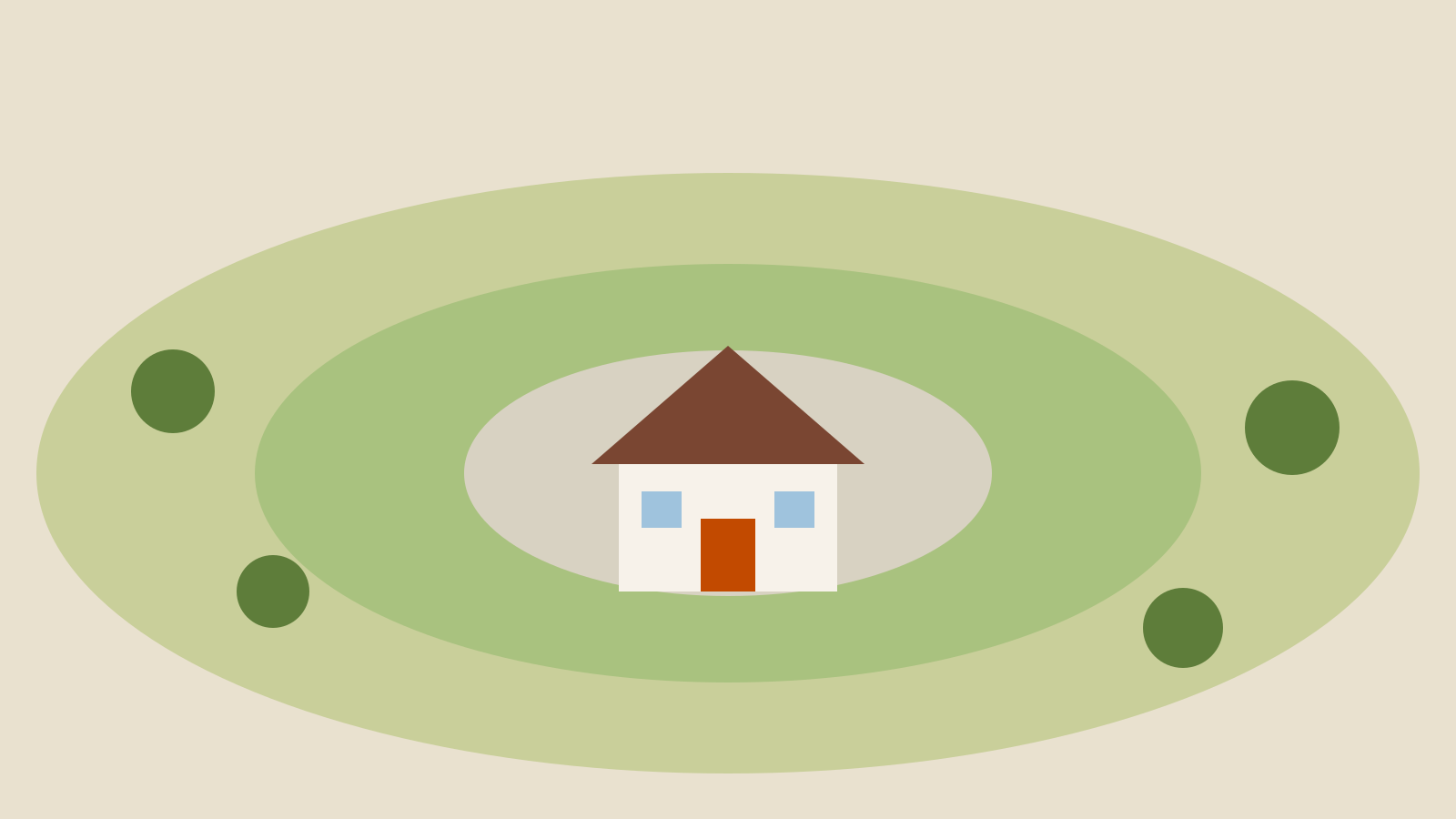
Most homes lost to wildfire don't catch fire from a wall of flames. They're ignited by embers — burning fragments carried ahead of the fire by the wind, sometimes more than a kilometre — that land in gutters, vents or on flammable material next to the house. Reducing what embers can ignite is the most effective thing a homeowner can do.
The three defensible space zones
Fire agencies such as CAL FIRE divide the area around a home into zones, with the strictest rules closest to the walls.
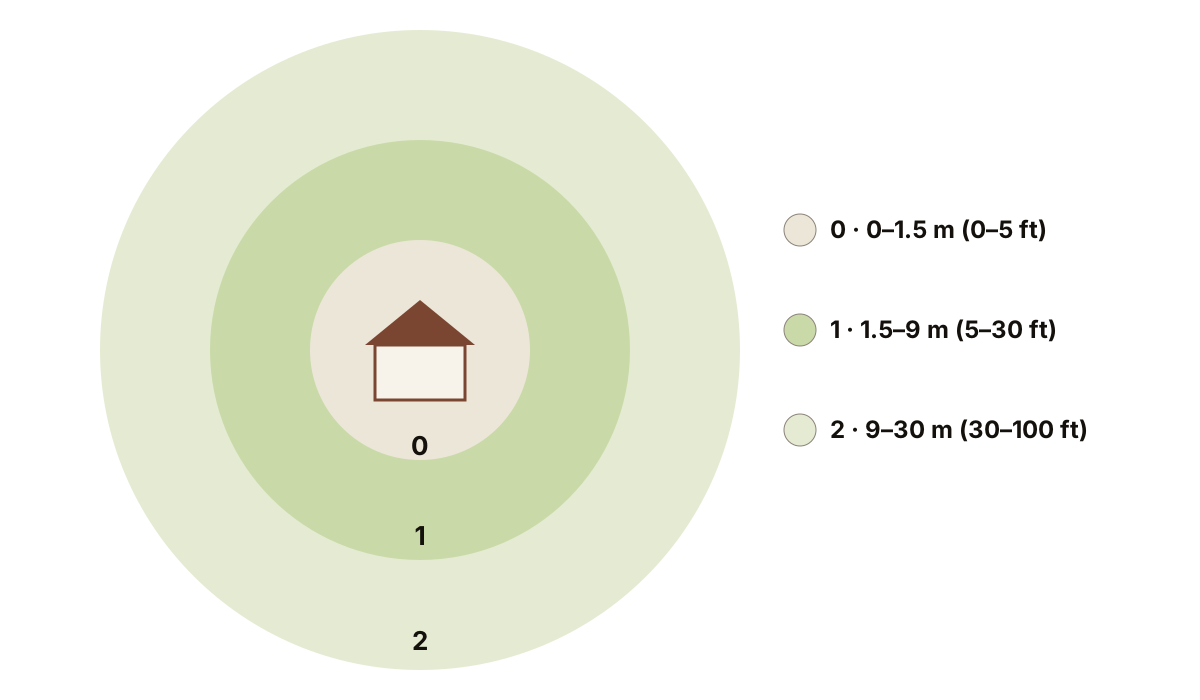
Zone 0: 0–1.5 m (0–5 ft)
The ember-resistant zone. Use hard surfaces such as gravel, pavers or concrete instead of bark mulch. Clear dead plants, leaves and pine needles, and move firewood, cushions and other combustibles away from walls, decks and fences.
Zone 1: 1.5–9 m (5–30 ft)
Keep it "lean, clean and green". Remove dead vegetation, space out trees and shrubs, cut back branches that overhang the roof, keep branches at least 3 m (10 ft) from the chimney, and keep grass short and watered.
Zone 2: 9–30 m (30–100 ft)
Reduce fuel. Mow grass to about 10 cm (4 in), leave horizontal space between shrubs and trees, and remove ladder fuels — low branches and shrubs that let flames climb into tree crowns.
Harden the house itself
- Roof — a Class A fire-rated roof (metal, tile or asphalt composition) is the single most important upgrade. Keep it and the gutters clear of leaves and needles.
- Vents — cover attic, eave and crawl-space vents with 3 mm (1/8 in) metal mesh, or fit ember-resistant vents.
- Windows — dual-pane, tempered glass is far less likely to break from heat.
- Decks and fences — use non-combustible material for the first 1.5 m (5 ft) where a fence meets the house, and keep the space under decks clear.
- Gaps — seal openings around eaves, garage doors and siding where embers can get in.
Make it a seasonal routine
Defensible space only works if it's maintained. Before fire season, clear the roof and gutters, remove dead vegetation and mow. When a Red Flag Warning is issued, bring outdoor cushions and doormats inside. Check local rules too — many areas have legal defensible space requirements and offer free inspections.